

Aluminum Blinds Maintenance for Simi Valley California Homes
January 12, 2026
Lower Cooling Costs With Custom Shutters in Simi Valley California
January 15, 2026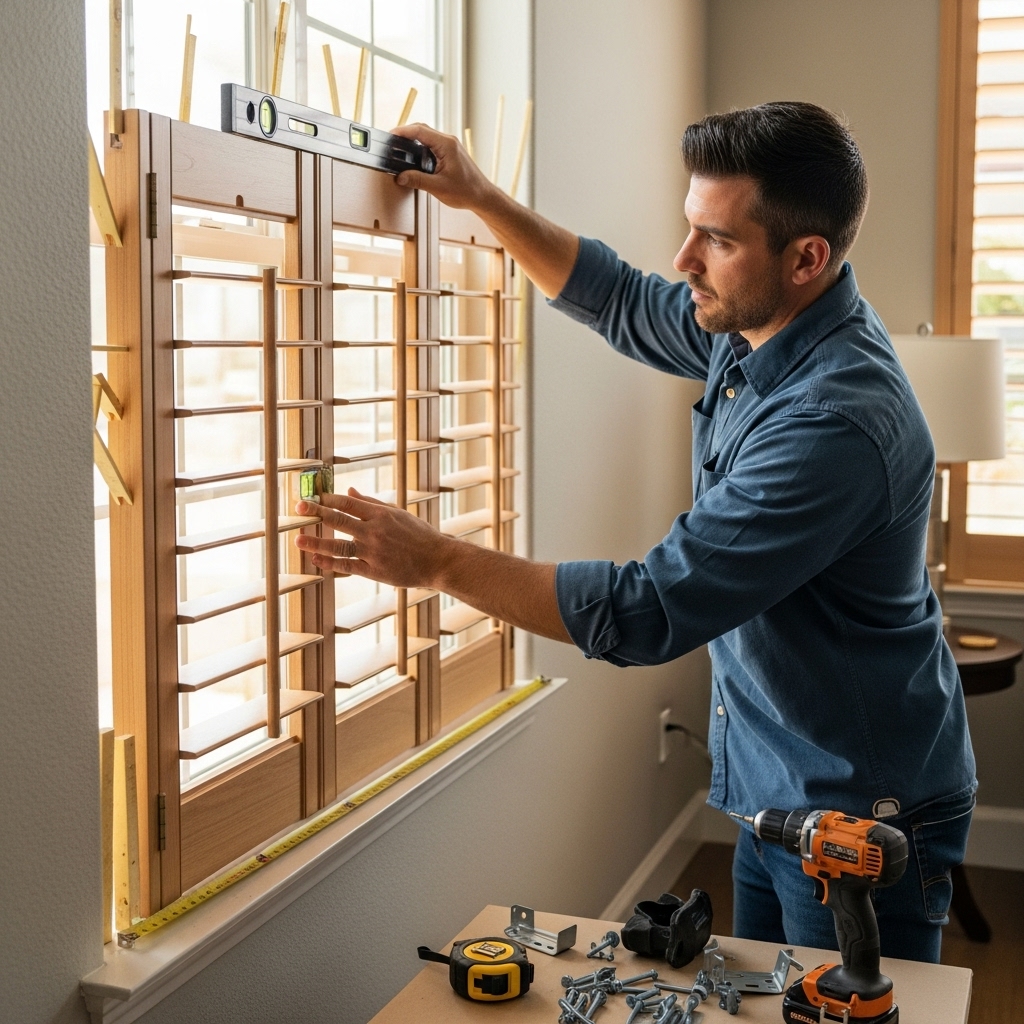
The difference between shutters that you love and shutters you merely tolerate almost always comes down to installation. In Simi Valley, where sun, breeze, and neighborhood architecture vary block by block, a precise, locally informed approach is the key to getting a result that looks seamless, operates smoothly, and elevates everyday comfort. Whether your home is a classic single-story ranch near the golf course, a hillside property with expansive views, or a newer build with contemporary lines, expertly installed shutters feel like millwork—part of the house rather than an accessory. From the first tape measurement to the final click of the magnets, every step contributes to the performance you will feel the moment the afternoon light starts to shift. For many homeowners, the journey starts with understanding why well-planned custom shutters are so dependent on the hands and eyes that put them in place.
Shutters are deceptively simple: panels, a frame, louvers, and hardware. But windows rarely present a perfect rectangle, and walls often tell the story of decades—slight drywall waves, out-of-plumb jambs, a sill that dips to one side. The installer’s role is to account for all of it. Before any screws go in, careful measurements capture width, height, diagonals, depth, and any obstructions from locks, handles, or nearby trim. Those numbers are not just dimensions; they are a map. They guide how the frame will sit, how panels will swing, and where louvers will clear. With that map in hand, the build can be tailored to your openings so the final result feels balanced and effortless.
Site evaluation: the foundation of a perfect fit
A thorough evaluation looks beyond size. It considers how light moves through your rooms during the day, which windows catch the brunt of the west sun, and where privacy matters most. In family rooms with big sliders, the plan may call for bi-fold or bypass panels to maintain smooth passage. In bedrooms that face the street, divider rails or split tilt give you privacy below while keeping daylight above. Kitchens might favor slightly larger louvers to bounce light while keeping prep counters cool. These decisions are refined on-site, in the actual light of your home, rather than in a catalog.
At this stage, the installer identifies whether an inside mount or outside mount better suits each opening. An inside mount reads clean and architectural, sitting within the window jamb. It requires adequate depth, true lines, and space to clear handles. An outside mount anchors to the wall or trim, ideal for shallow or out-of-square openings, adding a tidy frame that hides irregularities. Choosing correctly here pays dividends later: louvers rotate freely, panels close without forcing, and the reveal reads straight even when the underlying construction is not.
Fabrication details that support smooth operation
Once measurements and mounting decisions are set, fabrication turns numbers into parts that will live in your home for years. Engineered stiles resist warping; rails align to clear handles and sightlines; louvers are selected for scale and style. Paint or stain is applied in controlled layers for a durable, easy-to-clean finish. Hardware is chosen for smooth, quiet action, with hinges and magnets scaled to the panel size so everything feels balanced when you open and close the shutters. These details seem small until you experience them every day.
Special shapes deserve special attention. Arched windows call for carefully cut sunburst tops that echo the curve and maintain consistent louver spacing. Bays and bows rely on faceted frames that follow the geometry of the opening so each facet can be controlled independently. French doors benefit from slim, precise panels that clear handles and still deliver full louver control. Done right, these solutions enhance the architecture and look inevitable—as if the house was always meant to have them.
Installation day: bringing precision to the wall
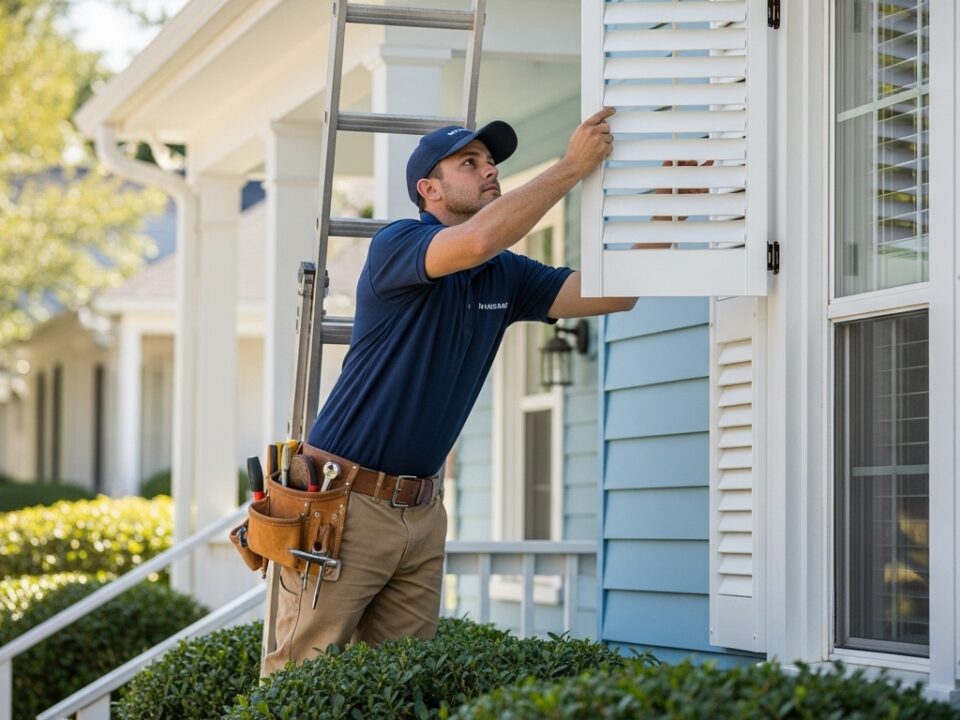
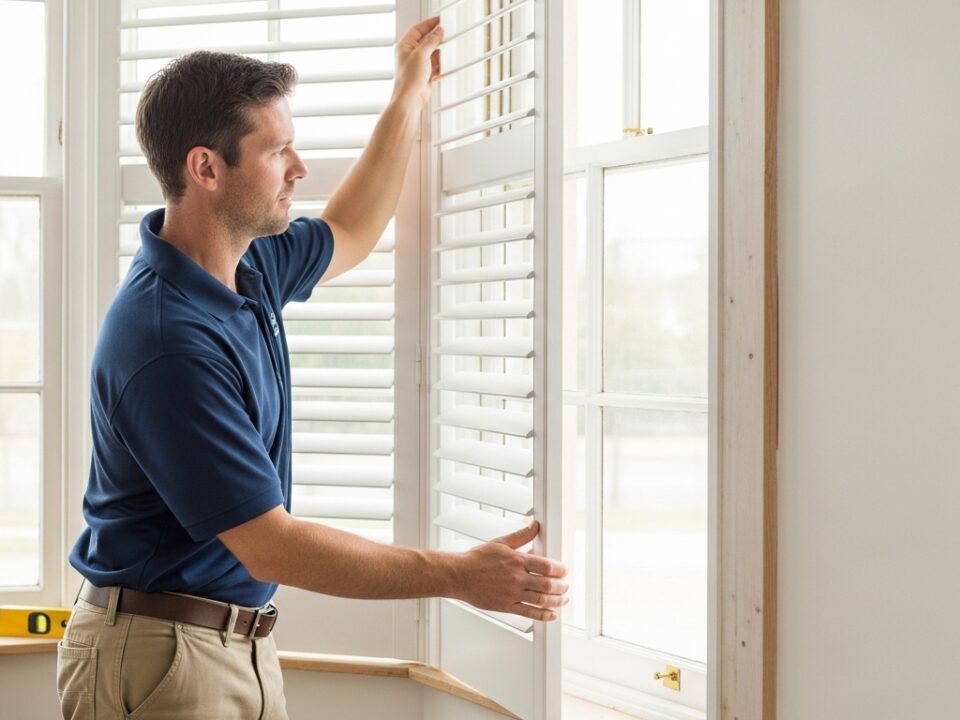
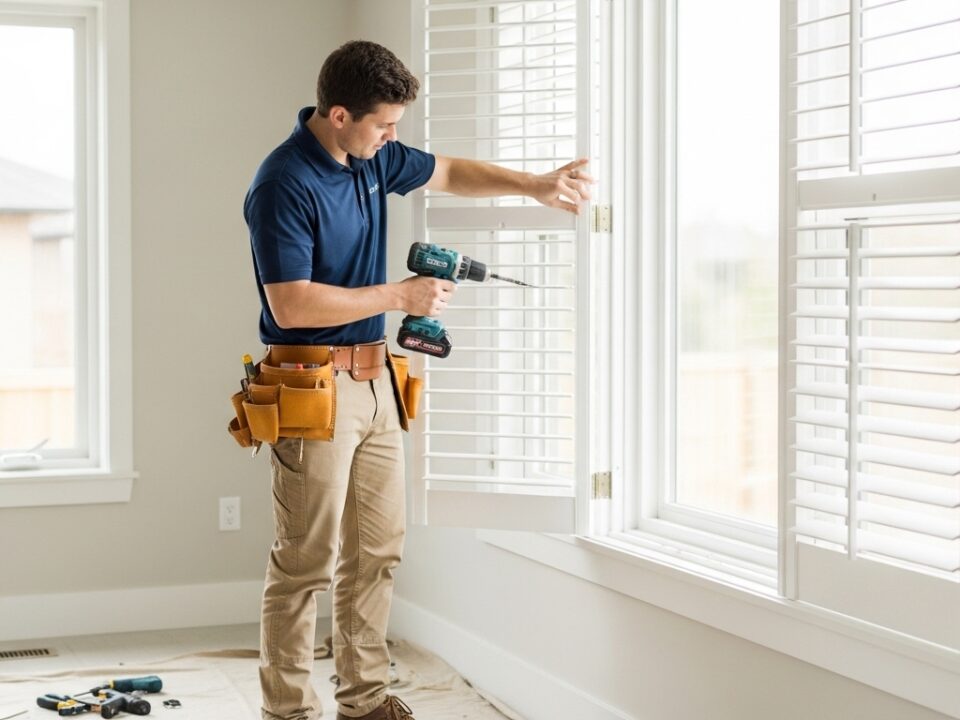
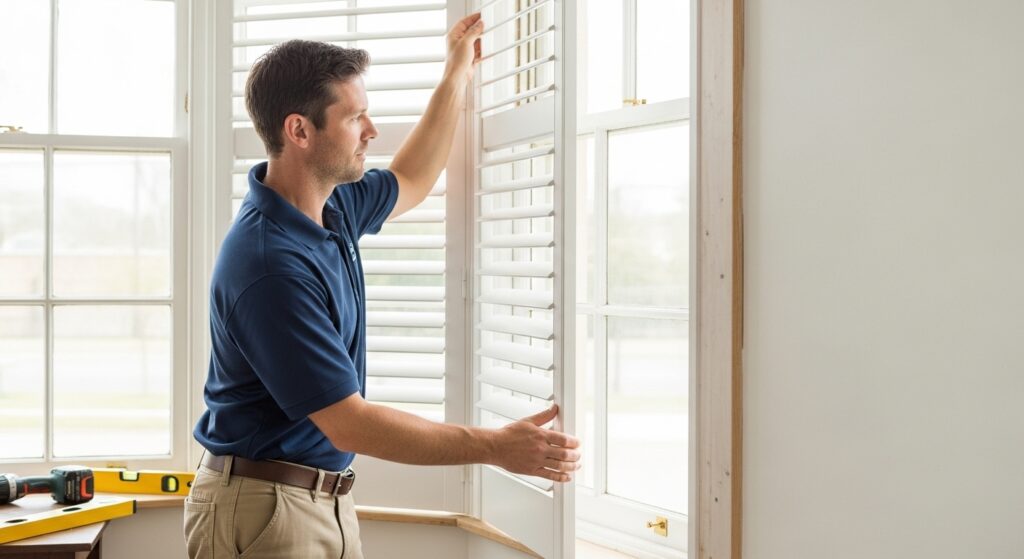
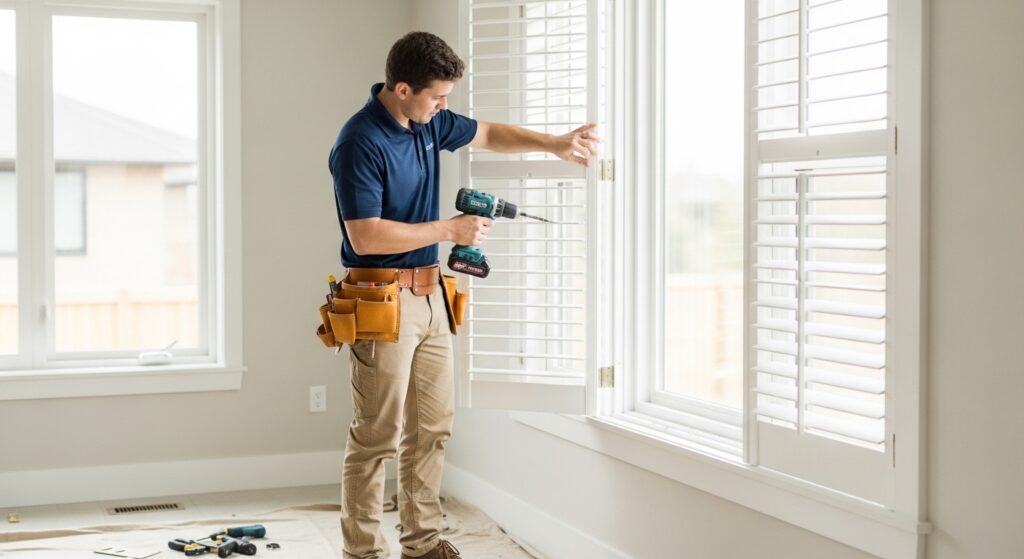
On installation day, the frame is the first act. It is set into place with a focus on plumb, level, and square, then shimmed to correct for any irregularities in the opening. Fasteners find solid backing—studs or strong jamb material—so the frame remains stable for the life of the shutters. Only after the frame is true do panels go in, where they are hung and tested. The installer checks reveals, hinge tension, louver action, and the meet at the center. Magnets are positioned to draw panels closed with a gentle, satisfying click, not a slam.
Next comes the fine finish. A soft, precise bead of caulk where the frame meets the wall seals micro-gaps and removes the faint halo of light that can otherwise outline the shutters at night. Screw holes are finished cleanly; edges are wiped; the work area is tidied. It is in this stage that shutters cross the line from a product to part of your home’s architecture, reading as one with the trim and wall planes around them.
Light control and louver strategy tailored to Simi Valley
Our sun can be generous and intense, sometimes in the same afternoon. Expert installers think about how to position louvers for your everyday life. On the west side of a home, larger louvers angled upward during the hottest hours block direct beams but reflect soft light back into the room. On east-facing bedroom windows, slimmer louvers offer a quieter look while letting you fine-tune morning light. Divider rails provide the flexibility to close the lower portion for privacy while keeping upper louvers open to the sky.
The tactile details matter as well. Hidden tilt rods give a clean, modern aesthetic and eliminate any visual chatter across large banks of windows. Traditional tilt rods deliver a familiar look and provide an easy tactile cue when closing up for the evening. The choice is choreographed with your home’s style and the way you use each room, from quiet mornings with coffee to lively weekend gatherings.
Why inside mount vs. outside mount matters
An inside mount brings a refined, built-in look. It requires jamb depth and reasonably true openings, rewarding you with crisp lines and louvers that can sit close to the glass for efficient light control. An outside mount is the problem-solver when depth is limited or when the opening is notably out of square. By setting its own, true reference, the outside mount frame makes panels meet cleanly and keeps light bleed to a minimum, even when the window behind it has its quirks. The decision is not cosmetic alone; it is a functional choice that affects how shutters perform for years.
For sliding doors and especially large spans, bypass or bi-fold tracks keep operation smooth without swinging panels into your furniture or walkway. Installers set track lines carefully, ensuring panels glide without chatter and park neatly. Handles, locks, and door clearances are addressed up front so the final result looks composed and works intuitively.
Finishes, color, and the feel of the room
Color selection influences both mood and performance. Light finishes bounce daylight deeper into a room, a benefit in spaces that need brightness without glare. Stained wood adds warmth and echoes floors or beams, grounding a great room or study. Expert installers and designers think about where your eyes land when you enter a space, how the sun travels across it, and which surfaces could use protection from UV. The chosen finish becomes part of that strategy: a tool for shaping light as much as a matter of taste.
Durable, low-gloss coatings reduce fingerprints and make cleaning a quick pass with a soft cloth. In our region’s dry months, maintaining balanced indoor humidity benefits not just shutters, but all woodwork—a simple step that preserves smooth louver action and crisp reveals. Your installer can provide practical guidance on daily care that keeps everything operating like new.
Special window shapes and doors done right
Arches, bays, clerestories, and French doors add personality to a home, and shutters should celebrate that. For arches, a well-executed sunburst maintains even spacing and a graceful curve. Bays require careful mitering and frame alignment so each facet reads as one composition while allowing independent control. On doors, slim profiles and thoughtful rail placement keep hardware accessible and lines clean. The goal is always the same: make the shutter solution feel inevitable, as if the house was designed around it.
In stairwells and tall windows, a motor-assist for louver adjustment can be a smart addition. It keeps the look clean while making daily operation as simple as a gentle press. The key is to hide control elements neatly and to calibrate movement so louvers stop exactly where you want them, every time.
Comfort, energy, and everyday living
Beyond the clean lines and the satisfying feel of well-hung panels, expertly installed shutters change how a room behaves. They moderate the heat that pours through west glass in late afternoon, protect floors and finishes from UV, and cocoon rooms on cool evenings by creating a still layer of air at the window. That comfort is immediate—less glare on your screens, fewer hot spots on countertops, and a calmer atmosphere that invites you to linger. Over time, you notice you use the same rooms more, at more hours of the day, because light and temperature are under your control.
This is especially true in flexible spaces that serve as home offices or homework areas. A quick louver adjustment eliminates stripes across a monitor and keeps focus effortless. In bedrooms, fine-tuned light control supports restful sleep and gentle waking. In kitchens and dining areas, you can angle louvers to protect surfaces while keeping the social connection to the outdoors that makes our climate so special.
Common pitfalls an expert prevents
DIY attempts often underestimate how much a slightly out-of-square opening can throw off performance. Panels that bind, gaps that leak light, or misaligned frames that telegraph a wall’s imperfections can turn an elegant idea into a daily frustration. Expert installers anticipate these issues. They plan hinge placement to avoid racking, choose fastener lengths for solid bite, and set magnets so the close feels soft but secure. They also account for future serviceability, ensuring panels can be removed and re-hung cleanly for window maintenance or repainting.
Another pitfall is louver clearance. Without careful planning, louvers can strike handles or trim at certain angles, limiting your control. Professionals model these interactions on-site and make decisions—about louver size, frame projection, or divider rail height—that keep the full range of motion available and intuitive.
Working with local pros pays dividends
Local installers bring a sensitivity to Simi Valley’s microclimates, sun paths, and architectural vocabulary. They know which neighborhoods are breezier, which streets catch the most late-day light, and how to plan solutions for hilltop exposures versus valley floors. That context shapes not just what looks good, but what will continue to function beautifully through seasons of change. It also means communication is easy, timelines are realistic, and support is nearby if you ever need a tune-up.
For many homeowners, the most gratifying moment arrives a day or two after installation, when the weather shifts and you realize the shutters simply handle it. The glare that once chased you from a favorite chair is gone; the evening chill near the window is softened. What remains is your home, behaving exactly as you hoped.
Frequently asked questions about installation
How long does installation typically take? It depends on the number and complexity of openings, but a professional team works efficiently, respecting your home and leaving rooms ready to enjoy the same day. Will shutters work with older windows? Yes; careful frames and shimming bring order to imperfect openings, and the result looks composed and operates smoothly.
Should I choose inside or outside mount? Your installer will recommend based on depth, squareness, and the look you want. Inside mounts read built-in; outside mounts solve challenging openings while providing a tidy frame. What about maintenance? Routine dusting and a light wipe keep finishes looking fresh, and quality hardware continues to operate quietly for years.
Can shutters fit arches and bays? Absolutely. Custom fabrication follows the geometry of your openings, giving you control and a finished look that celebrates the shape. Are they safe for homes with kids and pets? Yes. With no cords and smooth edges, shutters are a smart, family-friendly solution.
Ready for a fit that feels like it was made for your home?
If you are imagining panels that close with a confident click, louvers that move smoothly into the perfect angle, and rooms that stay comfortable as the day changes, it is time to talk with a local specialist. Start with a walk-through of your spaces, a look at sun exposure, and a conversation about style, finishes, and how you like to live. From there, a precise plan turns into a finished installation that looks inevitable—neither overbuilt nor underdone, just right.
When you are ready to begin, schedule a consultation to map your windows and discuss options tailored to Simi Valley’s light, breezes, and architecture. You will see how well-installed custom shutters transform not only your windows, but the way your home feels from morning to night. The right team will make the process smooth, the result beautiful, and the comfort unmistakable.