

Care And Maintenance For Wood Blinds In Simi Valley California
May 15, 2026
Custom Size Window Shutters in Simi Valley California
May 15, 2026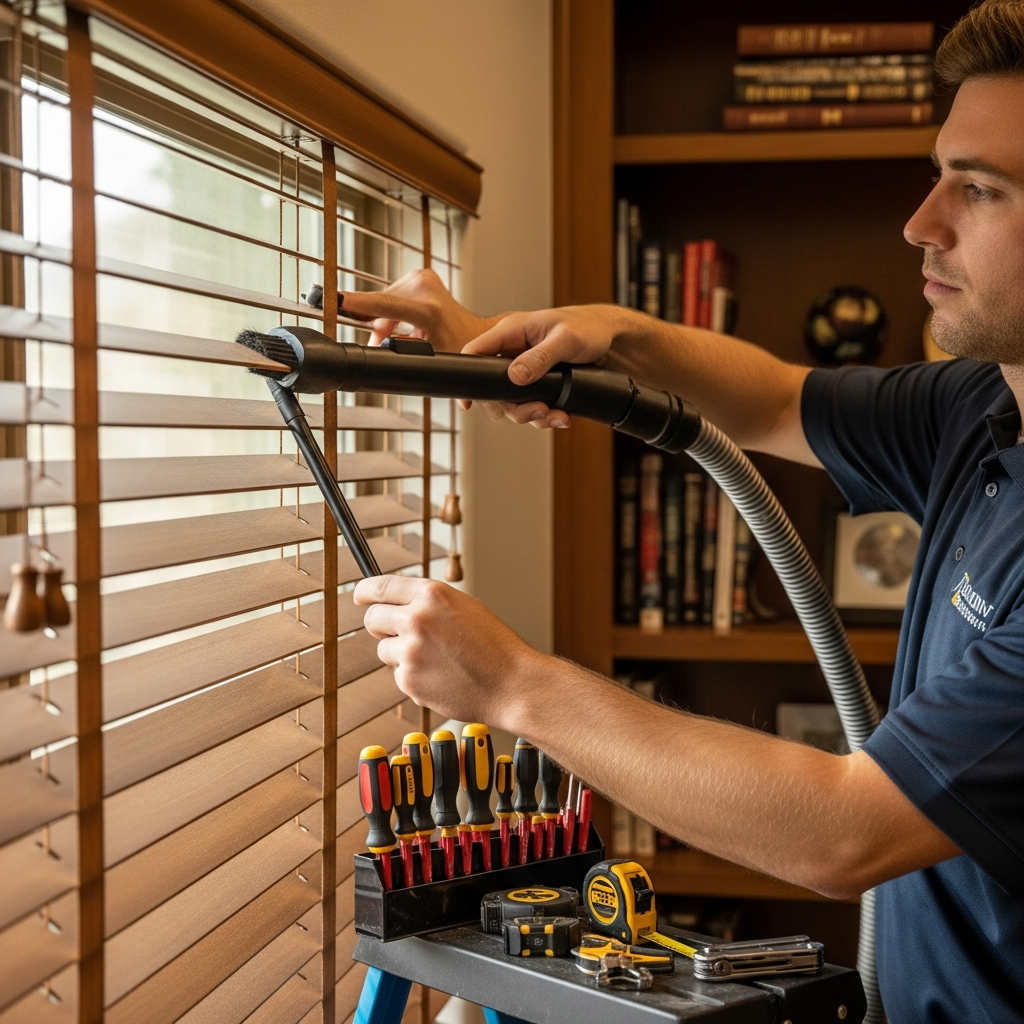
Living with abundant California light is a pleasure, and in Simi Valley we enjoy it almost year-round. That also means our window treatments work hard. Even high-quality wood blinds can develop quirks over time—especially with the dust our breezes bring, the daily adjustments families make, and the strong evening sun that pours over the hills. The good news is that most issues have straightforward causes and practical fixes you can handle or at least diagnose before calling in help. After years of working in homes from Big Sky and Wood Ranch to quiet courts off Los Angeles Avenue, here are the most common wood blind problems I see and how to solve them with confidence.
Slats Not Tilting Evenly
When you twist a wand or pull a tilt cord and the slats respond out of sync, the culprit is often dust or minor misalignment in the headrail mechanism. Start with the simple steps. Open the blinds fully, then tilt gently from one stop to the other to re-engage the internal gears. If you feel grit, vacuum the headrail with a soft brush attachment, focusing on the area where the tilt rod runs. Operate the tilt again to test for smoothness. If a few slats remain stubborn while others move, the ladder cords may have uneven tension; a light tap along the bottom rail while adjusting can help the ladders settle into alignment.
In homes with active pets or kids, fingers pushing between slats can occasionally twist an individual slat off true. Close the blinds and inspect from the side; a single slat sitting crooked can be rotated gently back into line with both hands, supporting near each ladder string so you do not stress the wood at the center.
Blinds Raise Unevenly or Won’t Stay Level
An uneven lift, where one side of the bottom rail climbs faster than the other, often traces back to tangled or uneven cords in the headrail. Raise the blind fully, then lower it slowly while guiding the bottom rail with your hand so it descends straight. If the problem persists, check that the cords travel cleanly through the cord guides and that the lock engages and releases without sticking. A tiny puff of dry silicone spray on the lock—applied to a cloth first, then dabbed—can restore smooth action, but avoid overspray on the slats.
Large picture windows along back patios are common here, and blinds on these spans can drift if they are yanked up quickly. Slow and steady is the cure. Over a few cycles of careful raising and lowering, the cords redistribute and the blind re-levels. If cords are frayed or visibly uneven in length, consider a professional re-cord.
Sticking or Slipping Tilt Mechanisms
When tilt action feels crunchy or starts slipping, it is usually a sign of dirt in the gear or a worn clutch. Vacuum the headrail edges, then test. If the wand spins freely without moving slats, the internal gear may have stripped and needs replacement. This is a straightforward part swap for most models. Continuing to force the wand past its stop can accelerate wear, so use a light hand at each end of the range to preserve gear life.
Light Leaks and Gaps
All blinds create minimal light lines; it is in their nature. But exaggerated leaks often come from installation issues or settling. Walls shift a touch with time, and brackets can loosen. Inspect mounts and tighten screws as needed. In very bright, west-facing rooms, a small return or side cover at the headrail can reduce haloing at the edges. You can also fine-tune tilt angles to bounce light upward during the harshest hours, softening the effect without darkening the room entirely.
For bedrooms where deeper dark is preferred, pairing blinds with drapery increases control. The blinds do the daily work; the panels finish the job when you want to sleep in on Saturday after a late Friday at Rancho Simi ballfields.
Warped or Curved Slats
Quality wood blinds resist warping in normal conditions, but moisture and direct contact with condensation can bend an occasional slat. Identify the source first. If the window regularly sweats on cool mornings, leave a little air gap between the blind and glass and improve ventilation. For a single slightly curved slat, you can often swap it with one from the top of the stack where the curve will be less noticeable, or replace it entirely if your model allows individual slat changes.
In kitchens and baths, a consistent routine of blotting splashes and running exhaust fans preserves the finish and shape. If multiple slats show distortion, it may be time to evaluate whether the location demands an alternative material, but in most Simi Valley rooms, wood performs admirably when cared for sensibly.
Frayed Cords and Safety Concerns
Daily life adds mileage to cords. Watch for fluffing or fray where cords pass through the bottom rail or along the lock. Address early. Re-cording is a well-understood repair that restores reliable function. For families with small children or pets, consider upgrading to cordless or motorized lifts, which remove dangling lines and streamline the look. Regardless of the system, keep cribs and play furniture away from windows, and ensure cleats or tension devices are installed where applicable.
Bottom Rail Won’t Sit Flush
A bottom rail that hovers on one side usually signals that slats have stacked unevenly or that debris in the headrail is interrupting even travel. Lift fully, gently tap the bottom rail side to side to settle the ladders, and lower while guiding straight down. A small mis-seated slat near the top can also cause drag; look along the ladder strings for any out-of-line piece and reseat it carefully.
Noise, Squeaks, and Rattles
Blinds should operate quietly. If you hear squeaks, it may be friction between the headrail and bracket or a dry lock. A tiny piece of felt at contact points or a touch of dry lubricant—applied sparingly—often resolves it. Rattling in a breeze can be tamed by adjusting the tilt slightly so slats are not perfectly flat; the micro-angle firms the stack and reduces chatter when a window is cracked for fresh air.
Color Fading or Finish Dullness
Sunlight in Simi Valley is generous, and over years it can ease a stain several shades lighter, particularly on south and west exposures. Rotate tilt direction periodically so the same edge does not take the brunt every day. Keep a light dusting routine so micro-abrasion does not haze the finish. If the sheen has dulled in patches, a furniture-safe polish used sparingly can even the look, but be cautious: heavy oils can attract dust. Often, the best refresh is simply clean slats and balanced light that flatters the grain you chose.
Hardware Loosening Over Time
Houses move subtly with seasons, and fasteners back out. Twice a year, check bracket screws, valance clips, and any hold-downs at doors. Tighten with the correct driver—never over-torque, which can strip threads in drywall. Where brackets have elongated their holes, a fresh anchor or a shift to sound framing makes the mount feel new again and prevents wobble that transfers stress to working parts.
Mid-Project Crossroads: Repair or Replace?
Sometimes a blind collects multiple small issues at once: a slipping tilt here, a frayed lift there, and a few slats showing their age. When that happens, run a quick tally. If repairs touch most systems—ladders, cords, gear—and finishes are tired, a clean slate is often smarter than chasing fixes. Newer designs operate more smoothly, offer safer lift options, and present finishes that stand up to our light. Sampling a current set of wood blinds in your rooms can clarify how much you stand to gain in daily feel and visual crispness.
Simple Habits That Prevent Problems
Guide the bottom rail with your free hand when lifting. Avoid over-twisting past the tilt stop. Dust weekly to keep grit out of gears. Leave a little space between slats and steamy windows. These are not chores so much as tiny rituals that keep the mechanism smooth and the look fresh. Over months and years, they add up to blinds that still feel satisfying to adjust every morning and evening.
Frequently Asked Questions About Wood Blind Fixes
Why do my slats tilt unevenly even after cleaning?
If a gentle full-range tilt does not reset alignment, examine the ladders and look for a slat that has jumped its seat. Reseating that one piece often returns the entire stack to sync.
Can I replace a single damaged slat?
On many models, yes. The bottom rail can be opened, ladders loosened slightly, and an individual slat swapped. Take photos during disassembly so you can retrace your steps.
What’s the safest lubricant for a sticky lock?
A dry silicone or PTFE product applied to a cloth and dabbed onto the lock mechanism is usually sufficient. Avoid wet oils that can migrate to slats and attract dust.
How do I fix a blind that won’t raise on one side?
Fully raise, then lower under control while guiding the bottom rail. If it persists, inspect for cord tangles or fray in the headrail. Severely uneven cords often call for re-cording to restore level travel.
Will new mounts solve light gaps?
They can help if the issue is bracket shift or a valance that no longer sits square. For persistent haloing in sun-intense rooms, consider modest side returns or layering with soft panels to cushion edges.
When should I call a professional?
If you face repeated cord breaks, a stripped tilt gear, or multiple warped slats, a pro can replace parts efficiently or advise on replacement. Safety upgrades like cordless conversions are also best handled by an experienced installer.
Ready for Smooth, Quiet, Reliable Blinds Again?
Whether your blinds need a quick tune-up, a few replacement parts, or a fresh start, addressing issues now restores the calm, controlled light you love at home. If you want to feel how current finishes and mechanisms improve daily living, explore today’s thoughtfully engineered wood blinds and bring your windows back to their best.